segunda-feira, 18 de outubro de 2021

Round 6 é uma alegoria do inferno capitalista


Round 6 é uma alegoria do inferno capitalista

14/10/2021

Por
Caitlyn Clark

Tradução
Cauê Seignemartin Ameni

Como Parasita, a nova série de sobrevivência da Netflix, Round 6, dramatiza os horrores da desigualdade e da exploração contemporânea na Coreia do Sul – e destrói o mito capitalista de que o trabalho árduo garante a prosperidade.


Embora o mundo conheça a indústria do entretenimento sul-coreana principalmente por sua prolífica produção de K-Pop, um punhado de filmes e séries de TV também tem atraído atenção internacional nos últimos anos. As exportações de filmes do país são muito mais sombrias e abordam direta e alegoricamente a dura realidade da vida na Coréia sob o capitalismo.

A última entrada neste gênero é o drama distópico de sobrevivência da Netflix, Squid Game [Round 6 no Brasil], que está a caminho de se tornar a série de streaming mais assistida de todos os tempos. Como o filme vencedor do Oscar 2019 de Bong Joon-ho, Parasita, e o drama Extracurricular de 2020 da Netflix, Round 6 reflete o crescente descontentamento com a desigualdade socioeconômica coreana.

Apelidado como um dos quatro “tigres asiáticos”, a economia sul-coreana passou por grandes mudanças nos últimos sessenta anos, após a rápida industrialização após a Guerra da Coréia. Em 1960, a renda per capita da Coreia do Sul de US$ 82 a colocava atrás de uma longa lista de países economicamente explorados e empobrecidos, como Gana, Senegal, Zâmbia e Honduras. Foi somente com a chegada ao poder do ditador Park Chung-hee em 1961 que a Coréia começou a experimentar um enorme crescimento econômico. Conhecida como o “Milagre do Rio Han”, a Coreia do Sul passou de um país de baixa renda a uma das principais economias do mundo em poucas décadas.

Embora o crescimento econômico da Coreia tenha elevado o padrão geral de vida, muitas pessoas foram deixadas para trás. A taxa de suicídio na Coreia do Sul é uma das mais altas do mundo, um problema especialmente prevalente entre os idosos, quase metade dos quais vive abaixo da linha da pobreza. Os jovens têm suas próprias tretas, como o recrutamento militar, o acirramento da pressão acadêmica e o desemprego (em 2020, a taxa de desemprego juvenil era de 22%). Eles cunharam um termo para essa sociedade de alta tensão e oportunidades limitadas: “O Inferno Joseon”, uma referência satírica à dinastia Joseon rigidamente hierárquica que a Coréia moderna teve de deixar para trás.

Enquanto milhões de coreanos comuns lutam para sobreviver, as elites do país mantêm um controle rígido sobre a economia. A economia coreana funciona com base nos chaebol, conglomerados empresariais pertencentes a um punhado de famílias ricas e poderosas que são apoiadas pelo governo. Antes elogiados por tirar a nação da pobreza, eles agora agem como o epítome do capitalismo monopolista na Coréia do Sul, cheia de escândalos de corrupção sem sofrerem consequências. Entre os maiores chaebol do país está a Samsung, cujo CEO Lee Jae-yong foi libertado da prisão em agosto de 2021 depois de cumprir apenas metade de sua sentença de 2 anos por suborno e peculato. Para justificar sua libertação, o governo sul-coreano citou a importância de Lee para a economia do país.

A extrema desigualdade da Coréia é o tema central de Round 6. No programa, um grupo de jogadores endividados competem numa variação de jogos infantis, para ter a oportunidade de ganhar 38 milhões de KRW (aproximadamente, 38 milhões. Só há um problema: todo jogo é jogado até a morte. Os jogadores que falham são mortos no local e o risco de eliminação aumenta a cada rodada. Cada vez que um jogador é morto, dinheiro extra é adicionado ao prêmio, exibido na forma de um cofrinho gigante que levita no dormitório dos jogadores.

Enquanto isso, um grupo de elites mundiais muito ricas assiste e se deleita nas miseráveis tentativas ​​dos jogadores de ganhar o prêmio em dinheiro. Eles apostam na vida dos jogadores da mesma forma que o protagonista da série, Gi-hun, apostou em uma dívida que arruinou sua vida tempos atrás: uma ilustração criativa de como a sociedade capitalista funciona com dois conjuntos de regras, um para os ricos e outra para os pobres.

O que diferencia Round 6 de outros conteúdos distópicos, como Battle Royale e The Hunger Games, é o foco explícito da série na classe e na desigualdade, especialmente no contexto da Coreia do Sul contemporânea. No segundo episódio, os personagens voltam ao seu cotidiano após terem votado pela descontinuação do jogo no primeiro episódio, mas as péssimas condições de suas vidas, atoladas com esmagadoras dívidas, inevitavelmente os fazem retornar. Se eles vão sofrer com o capitalismo apesar de tudo, eles também podem provar o prêmio em dinheiro que o jogo promete e que pode mudar suas vidas. Talvez em referência à natureza inevitável do Inferno Joseon, o episódio é intitulado “Inferno”.


A descrição da Coréia do Sul na série Round 6 ressalta como as circunstâncias econômicas para a classe trabalhadora coreana não lhes dão escolha a não ser jogar os jogos supervisionados pelos governantes da sociedade. A história gira em torno de Gi-hun, cujo vício em jogos de azar e o desemprego o deixaram endividado. Ela opta por jogos na esperança de ganhar dinheiro suficiente para pagar as contas médicas de sua mãe moribunda e para sustentar sua filha na tentativa de impedi-la de se mudar para os Estados Unidos com sua mãe.

Conforme a série avança, é revelado que os problemas financeiros iniciais de Gi-hun podem ser rastreados até a perda de seu emprego dez anos antes. O roteirista e diretor da série, Hwang Dong-hyuk, disse que modelou o personagem de Gi-hun após os organizadores da greve da fábrica da Ssangyong Motors em 2009, que terminou em derrota após sucessivos ataques na fábrica da Ssangyong Motors. Em flashbacks, aprendemos que depois que Gi-hun e um grupo de seus colegas foram demitidos, ele e seus companheiros sindicalistas se barricaram no depósito da Dragon Motors durante a noite. Os fura-greves arrombaram as portas e espancaram os trabalhadores com cassetetes, batendo em um colega de Gi-hun até a morte diante de seus olhos. Enquanto essa cena de violenta repressão se desenrola, Gi-hun se sente mal por não estar presente no nascimento de sua filha que estava nascendo.

A Coreia do Sul tem uma longa e contínua história de práticas anti-trabalho, muitas vezes extremas e às vezes violentas. No mês passado, o presidente da maior confederação sindical do país foi detido e encarcerado sob o pretexto de violar as normas de segurança da COVID-19 em uma manifestação trabalhista em Seul. Muito provavelmente, seu objetivo de elevar o grau da militância trabalhista intrigou o governo.

Embora Round 6 acene para a greve mais recente da Ssangyong Motors em 2009, a violenta luta de classes atravessou a história coreana por décadas. Em 1976, por exemplo, as trabalhadoras da fábrica têxtil Dong-Il iniciaram uma luta por eleições sindicais justas e democráticas que durou quase 2 anos, durante as quais enfrentaram uma imensa brutalidade policial e ataques de fura-greve. A luta culminou em um ataque de anti-sindicalistas apoiados pela CIA, que despejaram excrementos humanos nas trabalhadoras que tentavam votar nas eleições sindicais. Dong-Il sintetiza várias passagens da história trabalhista coreana ao mesmo tempo: a política anti-operária do governo, a guerra corporativa contra os trabalhadores, a violência contra as mulheres e o sindicalismo da empresa ligada à União Federal Coreana (FKTU). Os últimos 50 anos da história do trabalho coreano desde então não foram menos brutais.

No 4º episódio de Round 6, “Um mundo justo”, um competidor é pego trapaceando. Ele e seus cúmplices são escrachados rapidamente. O mestre do jogo então faz um discurso apaixonado no qual descreve o processo como uma meritocracia e a si mesmo como um provedor benevolente de oportunidades. “Essas pessoas sofreram desigualdade e discriminação no mundo real”, diz ele, “e estamos dando a elas uma última chance de lutar de forma justa para vencer”.

Embora talvez seja um aspecto universal nas sociedades capitalistas, a meritocracia tem ressonâncias particulares na cultura coreana, que remonta ao confucionismo. A ideia de que o trabalho duro valerá a pena continua sendo um slogan comum na Coréia, mesmo quando mais e mais jovens coreanos que seguiram o rígido caminho do sistema educacional coreano altamente competitivo enfrentam desemprego, dominação chaebol e desigualdade.

Para muitos, “O Milagre do Rio Han” se tornou “O Inferno de Joseon”. E, como Parasita antes dele, Round 6 mostra que o mito capitalista do país está sendo perfurado por rachaduras cada vez mais profundas.

quarta-feira, 13 de outubro de 2021

Pessoa a noção de bbb

 Uma Categoria do Pensamento Antropológico: A Noção de Pessoa 1


https://www.revistas.usp.br/ra/article/view/111620/109658

segunda-feira, 4 de outubro de 2021

Richard Levins Living the Eleventh Thesis


Living the Eleventh Thesis

Philosophers have sought to understand the world. The point, however, is to change it.

—Karl Marx, Theses on Feuerbach, No. 11

When I was a boy I always assumed that I would grow up to be both a scientist and a Red. Rather than face a problem of combining activism and scholarship, I would have had a very difficult time trying to separate them.

Before I could read, my grandfather read to me from Bad Bishop Brown’s Science and History for Girls and Boys.1 My grandfather believed that at a minimum every socialist worker should be familiar with cosmology, evolution, and history. I never separated history, in which we are active participants, from science, the finding out how things are. My family had broken with organized religion five generations back, but my father sat me down for Bible study every Friday evening because it was an important part of the surrounding culture and important to many people, a fascinating account of how ideas develop in changing conditions, and because every atheist should know it as well as believers do.

On my first day of primary school, my grandmother urged me to learn everything they could teach me—but not to believe it all. She was all too aware of the “racial science” of 1930s Germany and the justifications for eugenics and male supremacy that were popular in our own country. Her attitude came from her knowledge of the uses of science for power and profit and from a worker’s generic distrust of the rulers. Her advice formed my stance in academic life: consciously in, but not of, the university. I grew up in a left-wing neighborhood of Brooklyn where the schools were empty on May Day and where I met my first Republican at age twelve. Issues of science, politics, and culture were debated in permanent clusters on the Brighton Beach boardwalk and were the bread and butter of mealtime conversation. Political commitment was assumed, how to act on that commitment was a matter of fierce debate.

As a teenager I became interested in genetics through my fascination with the work of the Soviet scientist Lysenko. He turned out to be dreadfully wrong, especially in trying to reach biological conclusions from philosophical principles. However, his criticism of the genetics of his time turned me toward the work of Waddington and Schmalhausen and others who would not simply dismiss him out of hand in Cold War fashion but had to respond to his challenge by developing a deeper view of the organism–environment interaction.

My wife, Rosario Morales, introduced me to Puerto Rico in 1951, and my eleven years there gave a Latin American perspective to my politics. The various left-wing victories in South America were a source of optimism even in those grim times. FBI surveillance in Puerto Rico blocked me from the jobs I was looking for and I ended up doing vegetable farming for a living on the island’s western mountains.

As an undergraduate at Cornell University’s School of Agriculture, I had been taught that the prime agricultural problem of the United States was the disposal of the farm surplus. But as a farmer in a poor region of Puerto Rico, I saw the significance of agriculture for people’s lives. That experience introduced me to the realities of poverty as it undermines health, shortens lives, closes options, and stultifies personal growth, and to the specific forms that sexism takes among the rural poor. Direct labor organizing on the coffee plantations was combined with study. Rosario and I wrote the agrarian program of the Puerto Rican Communist Party in which we combined rather amateurish economic and social analysis with some firsthand insights into ecological production methods, diversification, conservation, and cooperatives.

I first went to Cuba in 1964 to help develop their population genetics and get a look at the Cuban Revolution. Over the years I became involved in the ongoing Cuban struggle for ecological agriculture and an ecological pathway of economic development that was just, egalitarian, and sustainable. Progressivist thinking, so powerful in the socialist tradition, expected that developing countries had to catch up with advanced countries along the single pathway of modernization. It dismissed critics of the high-tech pathway of industrial agriculture as “idealists,” urban sentimentalists nostalgic for a bucolic rural golden age that never really existed. But there was another view, that each society creates its own ways of relating to the rest of nature, its own pattern of land use, its own appropriate technology, and its own criteria of efficiency. This discussion raged in Cuba in the 1970s and by the 1980s the ecological model had basically won although implementation was still a long process. The Special Period, that time of economic crisis after the collapse of the Soviet Union when the materials for high-tech became unavailable, allowed ecologists by conviction to recruit the ecologists by necessity. This was possible only because the ecologists by conviction had prepared the way.

I first met dialectical materialism in my early teens through the writings of the British Marxist scientists J. B. S. Haldane, J. D. Bernal, Joseph Needham, and others, and then on to Marx and Engels. It immediately grabbed me both intellectually and aesthetically. A dialectical view of nature and society has been a major theme of my research since. I have delighted in the dialectical emphasis on wholeness, connection and context, change, historicity, contradiction, irregularity, asymmetry, and the multiplicity of levels of phenomena, a refreshing counterweight to the prevalent reductionism then and now.

An example: after Rosario suggested I look at Drosophila in nature—not just in bottles in the laboratory—I started to work with the Drosophila in the neighborhood of our home in Puerto Rico. My question was: How do Drosophila species cope with the temporal and spatial gradients of their environments? I began examining the multiple ways that different Drosophila species responded to similar environmental challenges. I could collect Drosophila in a single day in the deserts of Gúanica and in the rain forest around our farm at the crest of the cordillera. It turned out that some species adapt physiologically to high temperature in two to three days, and show relatively little genetic differences in heat tolerance along a 3,000-foot altitude gradient (about twenty miles). Others had distinct genetic sub-populations in the different habitats. Still others adapted to and inhabited only a part of the available environmental range.

One of the desert species was not any better at tolerating heat than some Drosophila from the rain forest, but were much better at finding the cool moist microsites and hiding in them after about 8 a.m. These findings led me to describe the concepts of co-gradient selection, where the direct impact of the environment enhances genetic differences among populations, and counter-gradient selection where genetic differences offset the direct impact of the environment. Since on my transect the high temperature was associated with dry conditions, natural selection acted to increase the size of the flies at Guánica while the effect of temperature on development made them smaller. The outcome turned out to be that the flies from the sea-level desert and the rain forest were of about the same size in their own habitats, but that Guánica flies were bigger when raised at the same temperature as rain forest flies.

In this work I questioned the prevailing reductionist bias in biology by insisting that phenomena take place on different levels, each with their own laws, but also connected. My bias was dialectical: the interaction among adaptations on the physiological, behavioral, and genetic levels. My preference for process, variability, and change set the agenda for my thesis.

The problem was how species can adapt to an environment when the environment was not always the same. When I began thesis work I was puzzled by the facile assumption that, faced with opposing demands, for example when the environment favors small size some of the time and large size the rest of the time, an organism would have to adopt some intermediate state as a compromise. But this is an unthinking application of the liberal bromide that when there are opposing views the truth lies somewhere in the middle. In my dissertation, the study of fitness sets was an attempt to examine when an intermediate position is truly an optimum and when is it the worst possible choice. The short answer turned out to be that when the alternatives are not too different, an intermediate position is indeed optimal, but when they are very different compared to the range of tolerance of the species, then one extreme alone or in some cases a mixture of extremes is preferable.

Work in natural selection within population genetics almost always assumed a constant environment, but I was interested in its inconstancy. I proposed that “environmental variation” must be an answer to many questions of evolutionary ecology and that organisms adapt not only to specific environmental features such as high temperature or alkaline soils but also to the pattern of the environment—its variability, its uncertainty, the grain of its patchiness, the correlations among different aspects of the environment. Moreover, these patterns of environment are not simply given, external to the organism: organisms select, transform, and define their own environments.

Regardless of the particular matter of an investigation (evolutionary ecology, agriculture, or more recently, public health), my core interest has always been the understanding of the dynamics of complex systems. Also, my political commitment requires that I question the relevance of my work. In one of Brecht’s poems he says, “Truly we live in a terrible time…when to talk about trees is almost a crime because it is a kind of silence about injustice.” Brecht was of course wrong about trees: nowadays when we talk of trees we are not ignoring injustice. But he was also right that scholarship that is indifferent to human suffering is immoral.

Poverty and oppression cost years of life and health, shrinks the horizons, and cuts off potential talents before they can flourish. My commitment to support the struggles of the poor and oppressed and my interest in variability combined to focus my attention on the physiological and social vulnerabilities of people.

I have been studying the body’s capacity to restore itself after it is stressed by malnutrition, pollution, insecurity, and inadequate health care. Continual stress undermines the stabilizing mechanisms in the bodies of oppressed populations making them more vulnerable to anything that happens, to small differences in their environments. This shows up in increased variability in measures of blood pressure, body mass index, and life expectancy as compared to more uniform results in comfortable populations. In examining the effects of poverty, it is not enough to examine the prevalence of separate diseases in different populations. Whereas specific pathogens or pollutants may precipitate specific named diseases, social conditions create more diffuse vulnerability that links medically unrelated diseases. For instance, malnutrition, infection, or pollution can breach the protective barriers of the intestine. But once breached for any of these reasons it becomes a locus of invasion by pollutants, microbes, or allergens. Therefore nutritional problems, infectious diseases, stress, and toxicities cause a great variety of seemingly unrelated diseases.

The prevailing notion since the 1960s had been that infectious disease would disappear with economic development. In the 1990s I helped form the Harvard Group on New and Resurgent Disease to reject that idea. Our argument was partly ecological: the rapid adaptation of vectors to changing habitats—to deforestation, irrigation projects, and population displacement by war and famine. We also focused on the equally rapid adaptation of pathogens to pesticides and antibiotics. But we also criticized the physical, institutional, and intellectual isolation of medical research from plant pathology and veterinary studies which could have shown sooner the broad pattern of upsurge of not only malaria, cholera, and AIDS, but also African swine fever, feline leukemia, tristeza disease of citrus, and bean golden mosaic virus. We have to expect epidemiological changes with growing economic disparities and with changes in land use, economic development, human settlement, and demography. The faith in the efficacy of antibiotics, vaccines, and pesticides against plant, animal, and human pathogens is naïve in the light of adaptive evolution. And the developmentalist expectation that economic growth will lead the rest of the world to affluence and to the elimination of infectious disease is being proved wrong.

The resurgence of infectious disease is but one manifestation of a more general crisis: the eco-social distress syndrome—the pervasive multilevel crisis of dysfunctional relations within our species and between it and the rest of nature. It includes in one network of actions and reactions patterns of disease, relations of production and reproduction, demography, our depletion and wanton destruction of natural resources, changing land use and settlement, and planetary climate change. It is more profound than previous crises, reaching higher into the atmosphere, deeper into the earth, more widespread in space, and more long lasting, penetrating more corners of our lives. It is both a generic crisis of the human species and a specific crisis of world capitalism. Therefore it is a primary concern of both my science and my politics.

The complexity of this whole world syndrome can be overwhelming, and yet to evade the complexity by taking the system apart to treat the problems one at a time can produce disasters. The great failings of scientific technology have come from posing problems in too small a way. Agricultural scientists who proposed the Green Revolution without taking pest evolution and insect ecology into account, and therefore expecting pesticides would control pests, have been surprised that pest problems increased with spraying. Similarly, antibiotics create new pathogens, economic development creates hunger, and flood control promotes floods. Problems have to be solved in their rich complexity; the study of complexity itself becomes an urgent practical as well as theoretical problem.

These interests inform my political work: within the left, my task has been to argue that our relations with the rest of nature cannot be separated from a global struggle for human liberation, and within the ecology movement my task has been to challenge the “harmony of nature” idealism of early environmentalism and to insist on identifying the social relations that lead to the present dysfunction. At the same time my politics have determined my scientific ethics. I believe that all theories are wrong that promote, justify, or tolerate injustice.

A leftist critique of the structure of intellectual life is a counterweight to the culture of the universities and foundations. The antiwar movement of the 1960s and 1970s took up the issues of the nature of the university as an organ of class rule and made the intellectual community itself an object of theoretical as well as practical interest. I joined Science for the People, an organization that started with a research strike at MIT in 1967 as a protest against military research on campus. As a member I helped in the challenge to the Green Revolution and genetic determinism. Antiwar activism also took me to Vietnam to investigate war crimes (especially the use of defoliants) and from there to organizing Science for Vietnam. We denounced the use of Agent Orange (used as defoliant in the Vietnamese jungle) that was causing birth defects among Vietnamese peasants. Agent Orange was one of the worst uses of chemical herbicides.

The Puerto Rican independence movement gave me an anti-imperialist consciousness that serves me well in a university that promotes “structural reform” and other euphemisms for empire. My wife’s sharp working-class feminism is a running source of criticism of the pervasive elitism and sexism. Regular work with Cuba shows me vividly that there is an alternative to a competitive, individualistic, exploitative society.

Community organizations, especially in marginalized communities, and the women’s health movement raise issues that academia prefers to ignore: the mothers of Woburn noticing that too many of their children from the same small neighborhood had leukemia, the hundreds of environmental justice groups that noted that toxic waste dumps were concentrated in black and Latino neighborhoods, and the Women’s Community Cancer project and others who insist on the environmental causes of cancer and other diseases while the university laboratories are looking for guilty genes. Their initiatives help me maintain an alternative agenda for both theory and action.

Within the university I have a contradictory relationship with the institution and with colleagues, a combination of cooperation and conflict. We may share a concern about health disparities and persistent poverty, but we are in conflict about corporations funding research for patentable molecules and about government agencies such as USAID (Agency for International Development) promoting the goals of empire.2

I never aspired to what is conventionally considered a “successful career” in academia. I do not find most of my personal validation through the formal reward and recognition system of the scientific community, and I try not to share the common assumptions of my professional community. This gives me wide freedom of choice. Thus when I declined to join the National Academy of Sciences and received many supportive letters praising my courage or calling it a difficult decision, I could honestly say that it was not a hard decision, merely a political choice taken collectively by the Science for the People group in Chicago. We judged that it was more useful to take a public stand against the Academy’s collaboration with the Vietnam-American War than to join the Academy and attempt to influence its actions from inside. Dick Lewontin had already tried that unsuccessfully and resigned, along with Bruce Wallace.

I have always enjoyed mathematics and see one of its tasks as making the obscure obvious. I regularly employ a sort of mid-level math in unconventional ways to promote understanding more than prediction. Much modeling now aims at precise equations giving precise prediction. This makes sense in engineering. In the field of policy, it makes sense to those who are the advisors to the rulers who imagine they have complete enough control of the world to be able to optimize their efforts and investments of resources. But those of us who are in the opposition have no such illusion. The best we can do is decide where to push the system. For this, a qualitative mathematics is more useful. My work with signed digraphs (loop analysis) is one such approach. Rejecting the opposition between qualitative and quantitative analysis and the notion that quantitative is superior to qualitative, I have mostly worked with those mathematical tools that assist conceptualization of complex phenomena.

Political activism, of course, attracts the attention of the agencies of repression. I have been fortunate in that regard, having experienced only relatively light repression. Others did not fare as well, with lost careers, years of imprisonment, violent attacks, intense harassment even of their families, and deportations. Some, mostly from the Puerto Rican, African-American, and Native American liberation movements, as well as the five Cuban anti-terrorists arrested in Florida, are still political prisoners.

Exploitation kills and hurts people. Racism and sexism destroy health and thwart lives. Studying the greed and brutality and smugness of late capitalism is painful and infuriating. Sometimes I have to recite from Jonathan Swift:

Like the boatman on the Thames
I row by and call them names.
Like the ever-laughing sage
In a jest I spend my rage
But it must be understood
I would hang them if I could.

For the most part scholarship and activism have given me an enjoyable and rewarding life, doing work I find intellectually exciting, socially useful, and with people I love.

Notes

  1. John Montgomery Brown had been a Lutheran Episcopal bishop of the Missouri Synod, excommunicated when he became a Marxist. In the 1930s he published the quarterly journal Heresy.
  2. USAID supports health and development in strategically chosen third-world countries. Its separate programs are sometimes helpful and participants are motivated by humanitarian concerns. But the agency is also a terrorist organization, supporting counter-revolutionary groups in Venezuela, Haiti, and Cuba. It once supported LEAP (Law Enforcement Assistance Program) that taught torture to Uruguayan and Brazilian police.

domingo, 3 de outubro de 2021

The True Foucault bbb

The True Foucault

The issues most important to Michel Foucault have moved from the margins to become major preoccupations of political life. But what did Foucault actually teach?

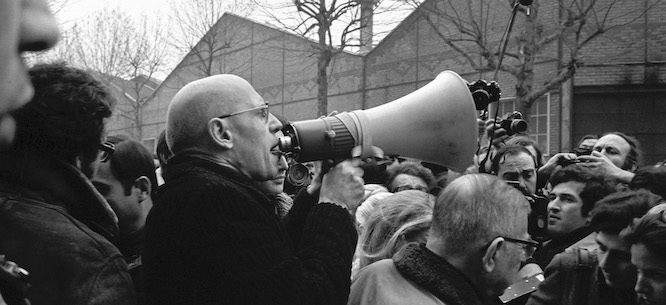
Michel Foucault and Jean Paul Sartre demonstrate in front of the Renault factories to protest against Pierre Overney's assassination (Photo by Josee Lorenzo\INA via Getty Images)

Suddenly, it seems, everyone has a lot to say about Michel Foucault. And much of it isn’t pretty. After enjoying a decades-long run as an all-purpose reference point in the humanities and social sciences, the French philosopher has come in for a reevaluation by both the right and the left.

The right, of course, has long blamed Foucault for licensing an array of left-wing pathologies. Some conservatives have even made Foucault a catchall scapegoat for ills ranging from slacker nihilism to woke totalitarianism. But a strange new respect is emerging for Foucault in some precincts on the right. Conservatives have flirted with the notion that Foucault’s hostility to confessional politics could make him a useful shield against “social justice warriors.” This presumption was strengthened during the COVID-19 pandemic, when Foucault’s critique of “biopolitics”—his term for the political significance assumed by public-health and medical issues in modern times—provided a handy weapon for attacking liberal fealty to scientific expertise.

As Foucault’s standing has climbed on the right, it has fallen on the left. A decade ago, left attention focused on whether Foucault’s discussions of neoliberalism in the 1970s suggested that his philosophical commitments harmonized with the emergent free-market ideology: hostile to the state, opposed to disciplinary power, and tolerant of behaviors previously deemed immoral. (In full disclosure, I contributed to this debate.) Recently, the locus of the leftist critique has, like its conservative counterpart, shifted to cultural politics. Thus the social theorists Mitchell Dean and Daniel Zamora maintain that Foucault’s politicization of selfhood inspired the confessional antics of “woke culture,” which seeks to overcome societal ills by making the reform of one’s self the ultimate managerial project. At the same time, Foucault’s standing has suffered a debilitating blow in the wake of recent claims that he paid underage boys for sex while living in Tunisia during the 1960s. These charges have brought new attention to places in his writing where—like some other radicals of his era—he questioned the need for a legal age of consent.

What is going on here? Why does Foucault now feel like our contemporary, almost forty years after his death? Why are leftists turning against him? And why are some conservatives adopting him?

First, the current debate over the political implications of Foucault’s thought is symptomatic of our off-kilter politics, in which populists style themselves as countercultural radicals. Second, our high-octane public discourse draws increasingly on ideas that used to be confined to the academy or rarefied intellectual circles. This is certainly true of progressive conceits—white privilege, gender theory, critical race theory—but it also bears out on the right, as seen in young conservatives’ increasing familiarity with the canons of nationalist and even fascist thought. As academic culture seeps into political debate, it is no surprise that a thinker of Foucault’s stature would be thrown into the mix.

Third, and most important, the early twenty-first century has become Foucauldian. Consider the topics that Foucault helped to pioneer as objects of philosophical reflection: mental illness, public health, gender and transgender identities, normalization and abnormality, surveillance, selfhood. Once confined to the margins of political thought, these issues have become major preoccupations with important stakes in everyday life, in the Western world and beyond.

The problem is that it has become all too easy to conflate Foucauldian subject matter with Foucault’s thought. In the very discussions that invoke him, the deeper wellsprings of his philosophies are often overlooked. Consequently, Foucault seems at once ultra-contemporary and—to use a term favored by his preferred philosopher, Friedrich Nietzsche—curiously “untimely” (that is, unfashionable or inopportune).

Foucault’s reputation is coated with thick accretions of polemical interpretation and partisan appropriation. A century ago, Marx’s theories found themselves in a similar situation, as their interpretation became a point of contention in the burgeoning socialist movement. In the wake of the Bolshevik Revolution, the Hungarian philosopher Georg Lukács felt compelled to ask: “What is orthodox Marxism?” Strange as it might sound, a similar question is in order for Foucault. What is orthodox Foucauldianism? What did Foucault actually teach?


Foucault was a protean thinker whose interests frequently changed in the course of his thirty-year career. Although he held many opinions, we must not forget that he was, at his core, a philosopher—not a historian (despite the historical character of his thinking) or an ideologue or a political commentator.

Aristotle began his Metaphysics with an assertion: “All men by nature desire to know.” First and foremost, Foucault sought to explore this claim—not as a self-evident truth but as an idea to be rendered strange and surprising. Foucault’s inquiry is not the traditional problem of epistemology (“What is knowledge?”) but a cultural question: “Why do we value knowledge?” In his essay “On Truth and Lie in an Extra-Moral Sense,” Nietzsche wrote, “In some remote corner of the universe, poured out and glittering in innumerable solar systems, there once was a star on which clever animals invented knowledge. That was the highest and most mendacious minute of ‘world history’—yet only a minute.” These words capture the spirit—if not the tone—of Foucault’s quest. Why are so many human activities colored by our thirst for knowledge? What would it mean to live without being haunted by the will to know?

The origin of Foucault’s interrogation lies in his early engagement with what is known as German idealism. Beginning with Immanuel Kant in the late eighteenth century, the thinkers of this tradition emphasized the way that consciousness shapes the world. If you can see a landscape, Kant maintained, it is because your consciousness is hardwired with a conception of space and time, and also of logical categories such as unity and plurality. Subsequent idealists, most famously G.W.F. Hegel, wrestled with the relationship between the “subject” (i.e., consciousness) and “objects” (external reality). Whereas some idealists in other philosophical schools made extravagant claims for subjectivity, reducing objective reality to figments of the self’s imagination, the signature concern of the German idealists was understanding what makes objects graspable to consciousness—how we can know our world.

German idealism provided Foucault with his core philosophical vocabulary. His originality lay in his transposition of the framework of German idealism onto historical and cultural concerns. In Madness and Civilization, Foucault showed that mental illness emerged as an object only with the development of a form of subjectivity rooted in empirical science. In The Birth of the Clinic, he examined the kind of subject required for modern medicine to emerge—specifically, one that was capable of understanding disease as immanent in mortal bodies. According to Foucault, both the subject and objects—consciousness and external reality—are shaped by history. Although he was often mistaken as a relativist, he never claimed that truth varies from perspective to perspective. His point was that what counts as true changes over time—even though, at any given moment, truth can assume a fixed and unassailable character. In his idiosyncratic way, Foucault was the last German idealist.

Foucault also subscribed to a distinct historical narrative in which the advent of what he called “humanism” (or, in more technical terms, philosophical anthropology) was modern history’s decisive turning point—and a deeply problematic one. A somewhat hasty reading of Foucault leads many to conclude that, through this narrative, he denounced the false claims of universality made in humanity’s name (for instance, the way that “humanity” incorporates ethnocentric or gendered assumptions) or suggested that humanism was a disingenuously emancipatory discourse that slyly incorporated pernicious forms of power. Perhaps Foucault agreed with these claims, but they were not the reasons for his philosophical anti-humanism. In his books from the sixties, Foucault’s histories always begin with paradigms rooted in an essentially religious worldview (in the Middle Ages, say, or the Renaissance) and culminate with a modern scientific outlook, in which knowledge is confined to the boundaries of human understanding. Contrary to the view that Foucault is a thinker of “discontinuities” (which Foucault, as if covering his tracks, encouraged), these narratives are often patently teleological. Indeed, they follow the historical schema popularized by Auguste Comte, the nineteenth-century apostle of positivism: we start with theological knowledge (reality as God’s creation), move onto metaphysics (in which reality is tethered to an intangible world of rational entities), and ultimately arrive at positive or scientific knowledge (reality as facts grasped by the human mind). For this portrayal, Foucault harnessed the insights of Martin Heidegger, specifically his claim that scientific knowledge is contingent on a conception of human beings as “subjects” whose capacities for understanding are essentially finite. A limited creature (rather than an infinite creator) can only grasp the world as a subject—that is, as a consciousness with necessarily circumscribed horizons.

What intrigued Foucault was that this apparent epistemological humility underwrote an enormous expansion of knowledge’s cultural authority: never was knowledge as important as when human beings lamented their inherent intellectual limits. And so experiences previously seen as being beyond knowledge’s realm became objects of scientific understanding—phenomena tainted by human finitude rather than attributes of a transcendent universe. Madness became mental illness, death spurred the expansion of medical knowledge, language was grasped as a web navigable only to the creature that had spun it. The fateful project of grounding knowledge in human finitude has, paradoxically, extended that “most mendacious” moment of world history well beyond its allotted minute.

Foucault wanted to break his culture’s addiction to knowledge. This goal shines most clearly in his history of sexuality. Although he believed that sexuality is a social construct, his more fundamental insight was that modern sexuality had made a “Faustian pact” with truth. What we like most about sex is understanding it—talking about desire, analyzing it, dissecting it, exploring it. Foucault’s assertion that the West has embraced a “sexual science” while the East has cultivated an “erotic art” indicates—despite, and perhaps because of, its crass orientalism—his deepest concerns about what it would be like to experience sex without viewing it as a clue to some elusive secret about ourselves. This is the basis of his programmatic statement that we should reacquaint ourselves with “bodies and pleasures.” Sex, Foucault speculated, could become a realm of experience emancipated from the will to know.

His pronouncements on politics were made in a similar vein. He is commonly associated with a bleak assessment of modern society, in which power, far from being confined to the state and economics, is disseminated through a network of disciplinary institutions—schools, hospitals, social services, asylums, and prisons, among others. Many are familiar with Foucault’s claim that the authority wielded by such entities is derived from their claims to specialized knowledge, which he succinctly dubbed “power-knowledge.” But, to Foucault, this argument was just one part of a broader framework. He relentlessly insisted that, even if power is a pervasive force in our collective lives, it always manifests itself in concrete struggles. He wanted us to see practices such as the military regimentation of bodies or the relationship between therapists and patients as akin to hand-to-hand combat—judo matches, rather than Orwellian thought control. Power is always an effort to control someone’s conduct: finding the right hold, identifying vulnerabilities, creating incentives for compliance.

Foucault was not a neoliberal, but he thought neoliberalism raised important questions. Specifically, he wondered about the capacity of welfare states to make fully rational healthcare-related decisions about millions of people. In an interview in 1983, he mused, “Take the example of dialysis: how many sick people are placed on dialysis, how many others are denied access? Imagine what would happen if one exposed the grounds of these choices, resulting in a kind of inequality of treatment. Scandalous rules would be brought to light!” Foucault’s point is neither that science is true nor that it is false (or merely “constructed”), but that invocations of science will rarely settle political disputes—because even issues as seemingly grounded in science as public health are in fact replete with nonscientific assumptions and interests.

Thus, while for Foucault power and knowledge were always intertwined, he also maintained that one must de-intellectualize power. This is one of the many reasons why he was skeptical of Marxism. Rather than challenge Marxism’s claim to being a science, Foucault argued that Marxism’s problem was wanting to be a science. His point was not that knowledge has no place in political struggles but that politics is always irreducibly about power—and frankly acknowledging this fact is preferable to believing that knowledge somehow cleanses us of power’s stain.

This view is often seen as cynical, but I am surprised that it is not more often seen as unduly optimistic: for Foucault, the necessary corollary to the claim that all relationships are saturated with power is that they are also all, in principle, reversible. As Hegel understood, there are no master-slave relationships in which masters, simply by dominating their slaves, do not put their authority at risk. Furthermore, Foucault’s conclusions about power dovetailed with his insights about sex: just as bodies and pleasures should avoid becoming used for endless analyses of sexuality, we should, in politics, pursue overt struggles for power as an alternative to power-knowledge.

Had Foucault ever been asked point-blank if he were a relativist, he might have answered, “If only—if only it were possible to overcome the will to truth.” He invites us to see truth not as reality’s fabric but as a cultural artifact, something that humans do. This does not mean that truth doesn’t exist: science unveils the laws of the physical universe; statistics identifies regularities in large numbers; art can present a picture of the world or express inner emotions. Indeed, Foucault’s beef with truth is precisely that it does exist—and exists so intensely. Although one can read Foucault’s recently published Confessions of the Flesh as condemning confessional practices, he also shows that confession became widespread among early Christian ascetics because it was exciting. Truth is not just imposed on us by power relations; we get off on it.

Foucault’s friend Paul Veyne once remarked that, whereas Heidegger was concerned with truth’s ontological basis, and Ludwig Wittgenstein with truth’s meaning, Foucault’s question was why truth is so untrue. No doubt this refers to Foucault’s recognition that truth is contaminated by power and that its criteria change over time. But the stakes of this claim are greater. Foucault demands that we question the value we assign to truth—whether truth allows us to lead the lives we wish to live.


Which brings us back to the present. In many ways, we are all Foucauldians now—in the ways we think about gender, normalization, psychiatry, confinement, surveillance. But rarely has politics seemed as intoxicated by truth as it does today, on both sides of the spectrum. As offensive as it may be to liberal sensibilities, right-wing conspiracy theories such as QAnon and “Stop the Steal” all partake in a politics of truth. This does not mean that their claims are plausible but rather that their aspirations to efficacy are premised on being “right.” (The shift from thinking in terms of the former to recognizing the latter is, in a sense, the essence of Foucauldian critique.) In a more academic vein, Jordan Peterson, too, places truth at the center of political debate when he charges that social justice warriors—inspired by what he absurdly calls Foucauldian “postmodernism”—willfully disregard the rough justice of the natural hierarchies identified by evolutionary science.

This will to truth is by no means confined to the right. If those of us on the left aspire to a broader understanding of mental health, if we value transgender identities, and if we promote institutions that embrace heterogeneity, it is generally because they appear to us as true, as justified by what we know. Even the background metaphorics of the term “woke” are steeped in notions of truth—a dash of born-again Christianity mixed in with an Enlightenment recognition of the world as it is. The conception of history advocated by many on the left in recent years seeks not simply to explore alternative narratives but to get the American past—and slavery, most importantly—“right.” “Believe science,” the liberal mantra of the pandemic, is also based on a view that the truth should be able to settle key political disagreements once and for all. It is striking that the contemporary left draws on almost all the truth forms—Christian, enlightened, scientific—upon which Foucault cast his critical eye.

To the extent that one can even speculate about such things, however, I imagine that Foucault would have supported initiatives like the 1619 Project and seen them as concurring with his genealogies of power, not to mention his politics of liberation. He was, as is commonly recognized, acutely aware of how historical narratives often exclude particular individuals, and he recognized the power of narrating history from the standpoint of marginalized groups.

But Foucault’s deeper project of weaning us off of our addiction to truth is as alien to our present as it was to his own time. “Speaking truth to power,” an idea that seems more relevant than ever, seems to have a pleasantly Foucauldian vibe to it. In fact, Foucault’s lesson is more accurately (if somewhat tautologically) phrased as “fighting power with power.” As union and community organizers realize, knowledge only gets you so far: the task of organizing is to confront power where it manifests itself, such as the workplace or housing regulations, and to limit its effects through strategic leveraging of collective strength. As that crypto-Foucauldian Saul Alinsky once observed, “No one can negotiate without the power to compel negotiation.” If politics is fundamentally about power, what surplus value do we get from also claiming to be right?

Those questions are as difficult to ask today as at any point. And so, as we continue to argue over a semi-fictionalized Foucault, the genuine philosopher remains more untimely than ever.


Michael C. Behrent is a history professor at Appalachian State University. He is the coeditor of Foucault and Neoliberalism and is working on a book on the young Foucault.